• Link to X
  • Link to Facebook
  • Link to Vimeo
  • Link to Mail
  • Español Español Spanish es
  • English English English en
Las políticas de la memoria
  • The Project
  • Research Team
    • Research team 2020-2024
    • Research Team 2016-2019
    • Research Team 2013-2015
    • Research Team 2010-2012
  • Team publications
    • Team books
    • Chapters and articles
  • Activities
    • Faces and traces of violence
    • Faces and traces of violence Lecture Series – Barcelona
    • Others activities
  • News
  • Mass media
  • Resources
    • Pedagogical resources
    • Links
  • Recommendations
    • Books
    • Audiovisuals
    • Articles, exhibitions and websites
  • Click to open the search input field Click to open the search input field Search
  • Menu Menu

DE KERANGAT, Zoé and MATEO, Lidia (2018). The limits of remembrance during the Spanish Transition: Questioning the ‘Pact of Oblivion’ through the analysis of a censored film and a mass-grave exhumation

June 8, 2018
DATE
TITLE AUTHORS TYPE

2018

The limits of remembrance during the Spanish Transition: Questioning the ‘Pact of Oblivion’ through the analysis of a censored film and a mass-grave exhumation Zoé de Kerangat y

Lidia Mateo Leivas

Article


https://politicasdelamemoria.org/wp-content/uploads/2015/01/logo_memoria_Web.png 0 0 F. https://politicasdelamemoria.org/wp-content/uploads/2015/01/logo_memoria_Web.png F.2018-06-08 14:34:132019-06-12 13:37:51DE KERANGAT, Zoé and MATEO, Lidia (2018). The limits of remembrance during the Spanish Transition: Questioning the ‘Pact of Oblivion’ through the analysis of a censored film and a mass-grave exhumation

DE KERANGAT, Zoé and MATEO, Lidia (2018). The limits of remembrance during the Spanish Transition: Questioning the ‘Pact of Oblivion’ through the analysis of a censored film and a mass-grave exhumation

June 8, 2018
FECHA
TÍTULO AUTORA TIPO

2018

The limits of remembrance during the Spanish Transition: Questioning the ‘Pact of Oblivion’ through the analysis of a censored film and a mass-grave exhumation Zoé de Kerangat and

Lidia Mateo Leivas

Article
https://politicasdelamemoria.org/wp-content/uploads/2015/01/logo_memoria_Web.png 0 0 F. https://politicasdelamemoria.org/wp-content/uploads/2015/01/logo_memoria_Web.png F.2018-06-08 11:30:492018-06-08 11:31:33DE KERANGAT, Zoé and MATEO, Lidia (2018). The limits of remembrance during the Spanish Transition: Questioning the ‘Pact of Oblivion’ through the analysis of a censored film and a mass-grave exhumation

WAGNER, Sara and MATYÓK, Thomas (2018). Monumental Change. The Shifting Politics of Obligation at the Tomb of the Unknowns

April 3, 2018
DATE TITLE AUTHORS TIPO

2018

Monumental Change. The Shifting Politics of Obligation at the Tomb of the Unknowns Sarah Wagner and

Thomas Matyók

Article
https://politicasdelamemoria.org/wp-content/uploads/2015/01/logo_memoria_Web.png 0 0 F. https://politicasdelamemoria.org/wp-content/uploads/2015/01/logo_memoria_Web.png F.2018-04-03 14:35:382019-06-12 13:38:51WAGNER, Sara and MATYÓK, Thomas (2018). Monumental Change. The Shifting Politics of Obligation at the Tomb of the Unknowns

6th Global Conference on Genocide

October 30, 2017


6th Global Conference on Genocide
CALL FOR PAPERS
Medical Faculty of Aix-Marseille University (France), 4-7 July 2018


Genocide and Mass Violence : diagnosis, treatment, and recovery ?
Humanities, social and medical sciences facing extreme violence

Conference Steering Committee
Dr. Elisabeth Anstett, CNRS, Chair of the Committee
Mme Laetitia Delouis, CNRS-AMU, Coordinator of the Committee
Mr Valery Ravix, AMU, IT manager

Conference Scientific Committee
Prof. Pascal Adalian, forensic anthropologist, AMU (France)
Dr. Pamela Colombo, sociologist, EHESS (France)
Prof. Jean-Marc Dreyfus, historian, the University of Manchester (UK)
Dr. Francisco Ferrandiz, social anthropologist, CSIC (Spain)
Prof. Caroline Fournet, legal scholar, University of Groningen (Netherlands)
Prof. Sévane Garibian, legal scholar, University of Geneva (Switzerland)
Dr. Gabriel Gatti, sociologist, University of Basque Country (Spain)
Dr. Anne Guillou, social anthropologist, CNRS (France)
Prof. Mario Ranaletti, historian, Universidad Nacional Tres de Febrero (Argentina)
Nicky Rousseau, historian, University of Western Cape (RSA)
Dr. Michel Signoli, archaeologist, CNRS (France)

Context
The International Network of Genocide Scholars (INoGS) was founded in January 2005 in Berlin to provide genocide studies with a non-partisan forum through which to present research and analysis on any aspect of genocide as well as other forms of collective violence. Because genocide is a highly contested legal, historical, sociological and political concept, INoGS has, since its founding, maintained support of research-led analysis rather than politically-defined agendas.
The series of Global Conferences organized by INoGS since 2009 in Sheffield, Brighton, San Francisco, Cape Town and Jerusalem, have witnessed intensified scholarly engagement with a range of issues of fundamental importance to the field of genocide studies, including theoretical and methodological approaches to the subject, the legal and ethical bases upon which to approach episodes of extreme violence, as well as the need to develop more effective means of stopping and preventing mass violence globally.

Conference aims
For more than 70 years, following the seminal analysis developed by legal scholar Raphael Lemkin, academics, practitioners, and researchers from a variety of disciplines have addressed the issue of genocide and mass violence using a wide range of empirical and theoretical approaches to explore case studies throughout history. Interdisciplinary research across the humanities, legal and social sciences, as well as comparative approaches, have thus characterized genocide studies.
However, even if extreme violence is relevant to various medical fields such as psychology, psychiatry and forensic anthropology, dialogue with the humanities and social sciences has been slow to develop. The 6th Global Conference of INoGS, to be held at the Medical Faculty of Aix-Marseille University (France) on 4-7 July 2018, therefore seeks to open new avenues for research on extreme violence while stimulating interdisciplinary exchanges between the humanities, social and medical sciences. The early detection and prevention of mass violence represents a global challenge for each and every one of these fields of knowledge.
This conference will thus seek to discuss various examples of past and contemporary mass crimes, delve into the causes as well as the short and long-term effects of genocidal processes, and foster dialogue between stakeholders who rarely exchange views.

Conference topics
The organizers invite proposals for papers, panels and roundtables on any aspect of genocide and mass crime. We are especially keen to receive proposals from Latin America, Asia and Africa. Scholars working on topics such as sexual violence, forced disappearances, torture, mass trauma, forced separation of children from their families, conflict resolution, and mediation initiatives are particularly encouraged to submit abstracts. Presentations on recent experiences of mass violence, such as those in Syria, Darfur, Iraq, Mexico, Colombia, and Myanmar are expressly welcome. We encourage the submission of papers and panels on issues regarding violence contamination and containment processes. Another theme of particular interest is that of humanitarian intervention and the ethical challenges it poses.

Other topics of interest include but are not restricted to :

Symptoms and diagnoseis
Individual cases or comparative analyses of genocide and mass violence
Colonialism and mass crime
Prevention of collective violence
Gendered violence, abduction and forced transfer of children from their families Mass trauma : voices of victims 
Roles of perpetrators, bystanders and victims
Forensic architecture, satellite imagery and tools for detecting mass murder
Mass death and migration
Refugee camps

Treatment
International law, criminal tribunals, and the International Criminal Court
Humanitarian and military interventions
Transitional justice 
Mass exhumations and identification of victims
DNA banks

Recovery

The repercussions of mass violence in both the short and long term
The politics of apology, reconciliation and restitution
Genocide denial, justifications and silences
Memorialization and commemoration of atrocities
Genocide, mass violence and the internet
Representations of genocide in literature, film, art, music and other media
Academic and educational practice within the field of genocide studies

Submission procedure

Participation is not restricted to INoGS members. We welcome interdisciplinary and theoretically-informed approaches as well as trans-disciplinary dialogue. Submissions from scholars, postgraduate students, as well as practitioners and researchers working in government, the NGO sector and other institutions are invited.
From mid October 2017, prospective participants will be able to upload proposals in the form of abstracts of no more than 250 words via the conference website at http://inogsconference2018.com . A biographical sketch of no more than 100 words will also be required. Panel and roundtable submissions need, in addition, to explain the rationale behind the suggestion. Queries relating to this process can be sent to admin@inogsconference2018.com . Applicants can expect to learn the outcome of their proposals within four weeks of submission. After their proposals have been accepted participants will need to register online at http://inogsconference2018.com/ which contains further information about the conference, fees, accommodation options, travel advice, and other relevant matters. Participants registering before 15th February will receive a 10% discount for early registration.

The closing date for paper, panel and roundtable submissions is 15th March 2018.

Funding Opportunities
INoGS is pleased to announce that funding is available to subsidize the attendance of scholars and PhD students from the Global South and from countries experiencing major financial difficulties. The number of grants available is limited. 
Prospective presenters from the Global South and from countries experiencing major financial difficulties are thus invited to apply for support to attend the conference under the conference website’s “SCHOLARSHIPS” tab, after their paper or panel proposal has been accepted. The closing date for applications is 28th February 2018 and awards will be announced before the end of March 2018. Please refer to the conference website for details.


http://www.inogsconference2018.com/spip.php?rubrique17
 

https://politicasdelamemoria.org/wp-content/uploads/2017/10/logo_accueil2.jpg 79 350 Miriam Saqqa https://politicasdelamemoria.org/wp-content/uploads/2015/01/logo_memoria_Web.png Miriam Saqqa2017-10-30 17:26:232017-10-30 17:27:376th Global Conference on Genocide

6th Global Conference on Genocide

October 30, 2017


6th Global Conference on Genocide
CALL FOR PAPERS
Medical Faculty of Aix-Marseille University (France), 4-7 July 2018


Genocide and Mass Violence : diagnosis, treatment, and recovery ?
Humanities, social and medical sciences facing extreme violence

Conference Steering Committee
Dr. Elisabeth Anstett, CNRS, Chair of the Committee
Mme Laetitia Delouis, CNRS-AMU, Coordinator of the Committee
Mr Valery Ravix, AMU, IT manager

Conference Scientific Committee
Prof. Pascal Adalian, forensic anthropologist, AMU (France)
Dr. Pamela Colombo, sociologist, EHESS (France)
Prof. Jean-Marc Dreyfus, historian, the University of Manchester (UK)
Dr. Francisco Ferrandiz, social anthropologist, CSIC (Spain)
Prof. Caroline Fournet, legal scholar, University of Groningen (Netherlands)
Prof. Sévane Garibian, legal scholar, University of Geneva (Switzerland)
Dr. Gabriel Gatti, sociologist, University of Basque Country (Spain)
Dr. Anne Guillou, social anthropologist, CNRS (France)
Prof. Mario Ranaletti, historian, Universidad Nacional Tres de Febrero (Argentina)
Nicky Rousseau, historian, University of Western Cape (RSA)
Dr. Michel Signoli, archaeologist, CNRS (France)

Context
The International Network of Genocide Scholars (INoGS) was founded in January 2005 in Berlin to provide genocide studies with a non-partisan forum through which to present research and analysis on any aspect of genocide as well as other forms of collective violence. Because genocide is a highly contested legal, historical, sociological and political concept, INoGS has, since its founding, maintained support of research-led analysis rather than politically-defined agendas.
The series of Global Conferences organized by INoGS since 2009 in Sheffield, Brighton, San Francisco, Cape Town and Jerusalem, have witnessed intensified scholarly engagement with a range of issues of fundamental importance to the field of genocide studies, including theoretical and methodological approaches to the subject, the legal and ethical bases upon which to approach episodes of extreme violence, as well as the need to develop more effective means of stopping and preventing mass violence globally.

Conference aims
For more than 70 years, following the seminal analysis developed by legal scholar Raphael Lemkin, academics, practitioners, and researchers from a variety of disciplines have addressed the issue of genocide and mass violence using a wide range of empirical and theoretical approaches to explore case studies throughout history. Interdisciplinary research across the humanities, legal and social sciences, as well as comparative approaches, have thus characterized genocide studies.
However, even if extreme violence is relevant to various medical fields such as psychology, psychiatry and forensic anthropology, dialogue with the humanities and social sciences has been slow to develop. The 6th Global Conference of INoGS, to be held at the Medical Faculty of Aix-Marseille University (France) on 4-7 July 2018, therefore seeks to open new avenues for research on extreme violence while stimulating interdisciplinary exchanges between the humanities, social and medical sciences. The early detection and prevention of mass violence represents a global challenge for each and every one of these fields of knowledge.
This conference will thus seek to discuss various examples of past and contemporary mass crimes, delve into the causes as well as the short and long-term effects of genocidal processes, and foster dialogue between stakeholders who rarely exchange views.

Conference topics
The organizers invite proposals for papers, panels and roundtables on any aspect of genocide and mass crime. We are especially keen to receive proposals from Latin America, Asia and Africa. Scholars working on topics such as sexual violence, forced disappearances, torture, mass trauma, forced separation of children from their families, conflict resolution, and mediation initiatives are particularly encouraged to submit abstracts. Presentations on recent experiences of mass violence, such as those in Syria, Darfur, Iraq, Mexico, Colombia, and Myanmar are expressly welcome. We encourage the submission of papers and panels on issues regarding violence contamination and containment processes. Another theme of particular interest is that of humanitarian intervention and the ethical challenges it poses.

Other topics of interest include but are not restricted to :

Symptoms and diagnoseis
Individual cases or comparative analyses of genocide and mass violence
Colonialism and mass crime
Prevention of collective violence
Gendered violence, abduction and forced transfer of children from their families Mass trauma : voices of victims 
Roles of perpetrators, bystanders and victims
Forensic architecture, satellite imagery and tools for detecting mass murder
Mass death and migration
Refugee camps

Treatment
International law, criminal tribunals, and the International Criminal Court
Humanitarian and military interventions
Transitional justice 
Mass exhumations and identification of victims
DNA banks

Recovery

The repercussions of mass violence in both the short and long term
The politics of apology, reconciliation and restitution
Genocide denial, justifications and silences
Memorialization and commemoration of atrocities
Genocide, mass violence and the internet
Representations of genocide in literature, film, art, music and other media
Academic and educational practice within the field of genocide studies

Submission procedure

Participation is not restricted to INoGS members. We welcome interdisciplinary and theoretically-informed approaches as well as trans-disciplinary dialogue. Submissions from scholars, postgraduate students, as well as practitioners and researchers working in government, the NGO sector and other institutions are invited.
From mid October 2017, prospective participants will be able to upload proposals in the form of abstracts of no more than 250 words via the conference website at http://inogsconference2018.com . A biographical sketch of no more than 100 words will also be required. Panel and roundtable submissions need, in addition, to explain the rationale behind the suggestion. Queries relating to this process can be sent to admin@inogsconference2018.com . Applicants can expect to learn the outcome of their proposals within four weeks of submission. After their proposals have been accepted participants will need to register online at http://inogsconference2018.com/ which contains further information about the conference, fees, accommodation options, travel advice, and other relevant matters. Participants registering before 15th February will receive a 10% discount for early registration.

The closing date for paper, panel and roundtable submissions is 15th March 2018.

Funding Opportunities
INoGS is pleased to announce that funding is available to subsidize the attendance of scholars and PhD students from the Global South and from countries experiencing major financial difficulties. The number of grants available is limited. 
Prospective presenters from the Global South and from countries experiencing major financial difficulties are thus invited to apply for support to attend the conference under the conference website’s “SCHOLARSHIPS” tab, after their paper or panel proposal has been accepted. The closing date for applications is 28th February 2018 and awards will be announced before the end of March 2018. Please refer to the conference website for details.


http://www.inogsconference2018.com/spip.php?rubrique17

 

https://politicasdelamemoria.org/wp-content/uploads/2017/10/logo_accueil2.jpg 79 350 Miriam Saqqa https://politicasdelamemoria.org/wp-content/uploads/2015/01/logo_memoria_Web.png Miriam Saqqa2017-10-30 17:20:302017-10-30 17:20:306th Global Conference on Genocide

DE KERANGAT, Zoé (2017). Beyond Local Memories: Exhumations of Francoism’s Victims as Counter-Discourse during the Spanish Transition to Democracy

October 23, 2017
DATE
TITLE AUTHOR TYPE

2017

Beyond Local Memories: Exhumations of Francoism’s Victims as Counter-Discourse during the Spanish Transition to Democracy

Zoé de Kerangat

Chapter
https://politicasdelamemoria.org/wp-content/uploads/2015/01/logo_memoria_Web.png 0 0 zoe.dekerangat https://politicasdelamemoria.org/wp-content/uploads/2015/01/logo_memoria_Web.png zoe.dekerangat2017-10-23 13:02:372019-07-16 13:58:23DE KERANGAT, Zoé (2017). Beyond Local Memories: Exhumations of Francoism’s Victims as Counter-Discourse during the Spanish Transition to Democracy

CROSSLAND, ZOÉ (2017) Im/materialities: things and signs

May 24, 2017
DATE
TITLE AUTHOR TYPE

2017

Im/materialities: things and signs Zoé Crossland Article
https://politicasdelamemoria.org/wp-content/uploads/2015/01/logo_memoria_Web.png 0 0 Laura Langa https://politicasdelamemoria.org/wp-content/uploads/2015/01/logo_memoria_Web.png Laura Langa2017-05-24 13:45:422017-05-24 13:45:42CROSSLAND, ZOÉ (2017) Im/materialities: things and signs

FERRÁNDIZ, Francisco (2017) Entre víctimas: investigando las exhumaciones de las fosas comunes de la Guerra Civil en la España contemporánea

May 18, 2017
DATE
TITLE AUTHOR Type

2017

Entre víctimas: investigando las exhumaciones de las fosas comunes de la Guerra Civil en la España contemporánea

Paco Ferrándiz

Chapter
https://politicasdelamemoria.org/wp-content/uploads/2015/01/logo_memoria_Web.png 0 0 Laura Langa https://politicasdelamemoria.org/wp-content/uploads/2015/01/logo_memoria_Web.png Laura Langa2017-05-18 13:03:032017-05-18 13:04:28FERRÁNDIZ, Francisco (2017) Entre víctimas: investigando las exhumaciones de las fosas comunes de la Guerra Civil en la España contemporánea

CROSSLAND, Zoe (2017) The Agency of the Dead

May 18, 2017
DATE
TITLE AUTHORS TYPE

2017

The Agency of the Dead

Zoe Crossland Chapter
https://politicasdelamemoria.org/wp-content/uploads/2015/01/logo_memoria_Web.png 0 0 Laura Langa https://politicasdelamemoria.org/wp-content/uploads/2015/01/logo_memoria_Web.png Laura Langa2017-05-18 12:54:492017-05-18 12:57:19CROSSLAND, Zoe (2017) The Agency of the Dead

Garibian, Sévane, Elisabeth Anstett and Jean-Marc Dreyfus (2017) Restos humanos e identificación. Violencia de masa, genocidio y el “giro forense”

May 8, 2017
Publication Date Title Edited by Type
 2017
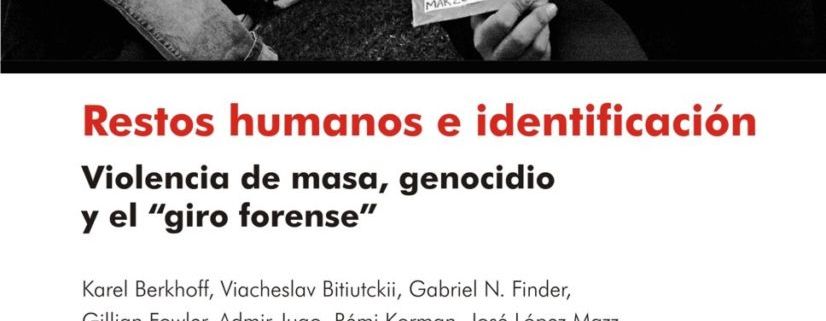
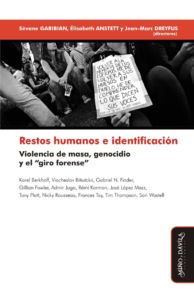
Restos humanos e identificación. Violencia de masa, genocidio y el “giro forense” Sévane Garibian, Elisabeth Anstett and Jean-Marc Dreyfus Book


EDITORS:  Sévane Garibian, Élisabeth Ansett y Jean-Marc Dreyfus.
WRITERS: Karel Berkhoff, Viacheslav Bitiutckii, Gabriel N. Finder, Gillian Fowler, Admir Jugo, Rémi Korman, José López Mazz, Tony Platt, Nicky Rousseau, Frances Tay, Tim Thompson y Sari Wastell.


Read index (in Spanish) (pdf) 

Read first pages (in Spanish) (pdf)


https://politicasdelamemoria.org/wp-content/uploads/2017/05/978-84-16467-89-1.jpg 1280 826 Laura Langa https://politicasdelamemoria.org/wp-content/uploads/2015/01/logo_memoria_Web.png Laura Langa2017-05-08 16:04:492018-06-26 17:29:23Garibian, Sévane, Elisabeth Anstett and Jean-Marc Dreyfus (2017) Restos humanos e identificación. Violencia de masa, genocidio y el “giro forense”
Page 7 of 23«‹56789›»

Lastest publications

  • DE KERANGAT, Zoé (2022). Memoria y justicia popular: Exhumaciones de las víctimas del franquismo durante la Transición españolaOctober 18, 2024 - 11:22 am
  • PALACIOS GONZÁLEZ, Daniel (2024). Making Monuments from Mass Graves in Contemporary SpainSeptember 17, 2024 - 5:15 pm
  • SAQQA CARAZO, Miriam (2024). Las exhumaciones por Dios y por EspañaSeptember 17, 2024 - 11:23 am

Lastest activities

  • Historical Memory and Archaeology of the Spanish Civil War and the Franco RegimeNovember 26, 2024 - 11:48 am
  • Where are the Africans? Erasure, elision and that task of self-writingSeptember 17, 2024 - 11:28 am
  • International Congress. Weaving memory: Public Policies, Mass Graves, and Materialities. 2024May 11, 2024 - 8:25 am
Tweets por el @PoliticaMemoria.

Políticas de la memoria

El pasado bajo tierra: exhumaciones y políticas de la memoria en la España contemporánea en perspectiva transnacional y comparada

Proyectos Asociados:
HISTOFOR: PID2024-159223NB-I00 (2026-20289
MEM2OR: BICON24084 (2025-2026)
NECROPOL: PID2019-104418RB-I00 (2020-2024)
SUBTIERRO: CSO2015-66104-R (2016-2019)
UNREST: H2020 REFLECTIVE-5-2015, ref. 693523 (2016-2019)
PASADO BAJO TIERRA: CSO2012-32709 (2013-2015)
ISTME: COST Action IS1203 (2012-2016)
POLMEM: CSO2009-09681 (2010-2013)
SPBUILD: 7PM MARIE CURIE, ITN 238589 (2010-2013)
PIE CSIC: 200710I006 (2007-2009). Las políticas de la memoria en la España contemporánea


Contact

Centro de Ciencias Humanas y Sociales - Consejo Superior de Investigaciones Científicas.
Offices: 1F25 and 1F18
Albasanz 26-28.
Madrid 28037 (Spain)
politicasdelamemoria@gmail.com

hosgeldin bonusu veren siteler

© Políticas de la memoria - 2015. Some rights reserved. Creative Commons license. | Web design and developmen by Freepress S. Coop. Mad.
  • Link to X
  • Link to Facebook
  • Link to Vimeo
  • Link to Mail
Scroll to top Scroll to top Scroll to top