• Link to X
  • Link to Facebook
  • Link to Vimeo
  • Link to Mail
  • Español Español Español es
  • English English Inglés en
Las políticas de la memoria en España
  • Proyecto
  • Equipo
    • Equipo 2025-2027
    • Equipo 2020-2024
    • Equipo 2016-2019
    • Equipo 2013-2015
    • Equipo 2010-2012
  • Publicaciones
    • Libros del equipo
    • Capítulos y artículos
  • Actividades
    • Seminario Rastros y Rostros de la Violencia
    • Seminari Rastres i Rostres de la Violència
    • Otras actividades
  • Actualidad
  • Prensa
  • Recursos
    • Materiales
    • Enlaces
  • Recomendaciones
    • Libros recomendados
    • Audiovisuales de interés
    • Artículos, exposiciones y webs
  • Digital.CSIC
  • Click to open the search input field Click to open the search input field Buscar
  • Menú Menú

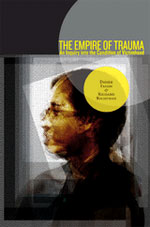
The Empire of Trauma: An Inquiry into the Condition of Victimhood

enero 28, 2011

The Empire of Trauma: An Inquiry into the Condition of Victimhood  By Didier Fassin, Richard Rechtman, Rachel Gomme

Today we are accustomed to psychiatrists being summoned to scenes of terrorist attacks, natural disasters, war, and other tragic events to care for the psychic trauma of victims–yet it has not always been so. The very idea of psychic trauma came into being only at the end of the nineteenth century and for a long time was treated with suspicion. The Empire of Trauma tells the story of how the traumatic victim became culturally and politically respectable, and how trauma itself became an unassailable moral category.

Basing their analys is on a wide-ranging ethnography, Didier Fassin and Richard Rechtman examine the politics of reparation, testimony, and proof made possible by the recognition of trauma. They study the application of psychiatric victimology to victims of the 1995 terrorist bombings in Paris and the 2001 industrial disaster in Toulouse; the involvement of humanitarian psychiatry with both Palestinians and Israelis during the second Intifada; and the application of the psychotraumatology of exile to asylum seekers victimized by persecution and torture.

Revealing how trauma has come to authenticate the suffering of victims, The Empire of Trauma provides critical perspective on some of the moral and political issues at stake in the contemporary world.

Didier Fassin, one of France’s leading social anthropologists and a physician in internal medicine, is the James D. Wolfensohn Professor in the School of Social Science at the Institute for Advanced Study in Princeton. Richard Rechtman, a psychiatrist and anthropologist, is medical director of the Institut Marcel Rivière in France. Both are members of the Interdisciplinary Research Institute on Social Issues (IRIS).

Compartir esta entrada
  • Compartir en Facebook
  • Compartir en X
  • Compartir en WhatsApp
  • Compartir en LinkedIn
  • Compartir por correo
https://politicasdelamemoria.org/wp-content/uploads/importedmedia/blogmedia-138.jpg 227 150 Daniel https://politicasdelamemoria.org/wp-content/uploads/2015/01/logo_memoria_Web.png Daniel2011-01-28 18:31:402011-01-28 18:31:40The Empire of Trauma: An Inquiry into the Condition of Victimhood

Últimas publicaciones

  • SAQQA CARAZO, Miriam (2026). Fosas de republicanos en Madrid: localizaciones e investigaciones en base a la Causa General.mayo 18, 2026 - 3:25 pm
  • Díaz-Ramoneda, Eulàlia y Queralt Solé Barjau (edt.) (2026). Mujeres exhumadas. Guerra y posguerra: la violencia contra las mujeres por parte del bando sublevado.mayo 13, 2026 - 9:35 am
  • SAQQA CARAZO, Miriam y RENSHAW, Layla (2026). Martyr Materiality in Exhumations under the Spanish Dictatorship: Deconstructing the Francoist Narrative in the 1939 Soto de Aldovea Casemarzo 17, 2026 - 12:09 pm

Últimas actividades

  • Conferencia «OBJETOS CULPABLES. Memoria familiar y cultura material»mayo 20, 2026 - 5:15 pm
  • Conferencia «Posturas estéticas frente a la violencia. Cinco textos sobre la Guerra Civil»abril 8, 2026 - 12:43 pm
  • Conferencia «Cerca de aquí»marzo 8, 2026 - 12:39 pm
Tweets por el @PoliticaMemoria.

Políticas de la memoria

El pasado bajo tierra: exhumaciones y políticas de la memoria en la España contemporánea en perspectiva transnacional y comparada

Proyectos Asociados:
HISTOFOR: PID2024-159223NB-I00 (2026-20289
MEM2OR: BICON24084 (2025-2026)
NECROPOL: PID2019-104418RB-I00 (2020-2024)
SUBTIERRO: CSO2015-66104-R (2016-2019)
UNREST: H2020 REFLECTIVE-5-2015, ref. 693523 (2016-2019)
PASADO BAJO TIERRA: CSO2012-32709 (2013-2015)
ISTME: COST Action IS1203 (2012-2016)
POLMEM: CSO2009-09681 (2010-2013)
SPBUILD: 7PM MARIE CURIE, ITN 238589 (2010-2013)
PIE CSIC: 200710I006 (2007-2009). Las políticas de la memoria en la España contemporánea


Contacto

Centro de Ciencias Humanas y Sociales - Consejo Superior de Investigaciones Científicas.
Despachos 1F25 y 1F18
C/Albasanz 26-28.
Madrid 28037 (España)
politicasdelamemoria@gmail.com

hosgeldin bonusu veren siteler

© Políticas de la memoria- 2015. Algunos derechos reservados. Licencia Creative Commons. | Desarrollo y diseño web: Freepress S. Coop. Mad.
  • Link to X
  • Link to Facebook
  • Link to Vimeo
  • Link to Mail
Link to: DESAPARECIDOS Link to: DESAPARECIDOS DESAPARECIDOS Link to: Cadena Ser San Sebastián (20/01/2011): Entrega a Francisco Etxeberria de la Medalla al Mérito Ciudadano 2011 Link to: Cadena Ser San Sebastián (20/01/2011): Entrega a Francisco Etxeberria de la Medalla al Mérito Ciudadano 2011 Cadena Ser San Sebastián (20/01/2011): Entrega a Francisco Etxeberria de la...
Desplazarse hacia arriba Desplazarse hacia arriba Desplazarse hacia arriba