• Link to X
  • Link to Facebook
  • Link to Vimeo
  • Link to Mail
  • Español Español Spanish es
  • English English English en
Las políticas de la memoria
  • The Project
  • Research Team
    • Research team 2020-2024
    • Research Team 2016-2019
    • Research Team 2013-2015
    • Research Team 2010-2012
  • Team publications
    • Team books
    • Chapters and articles
  • Activities
    • Faces and traces of violence
    • Faces and traces of violence Lecture Series – Barcelona
    • Others activities
  • News
  • Mass media
  • Resources
    • Pedagogical resources
    • Links
  • Recommendations
    • Books
    • Audiovisuals
    • Articles, exhibitions and websites
  • Click to open the search input field Click to open the search input field Search
  • Menu Menu

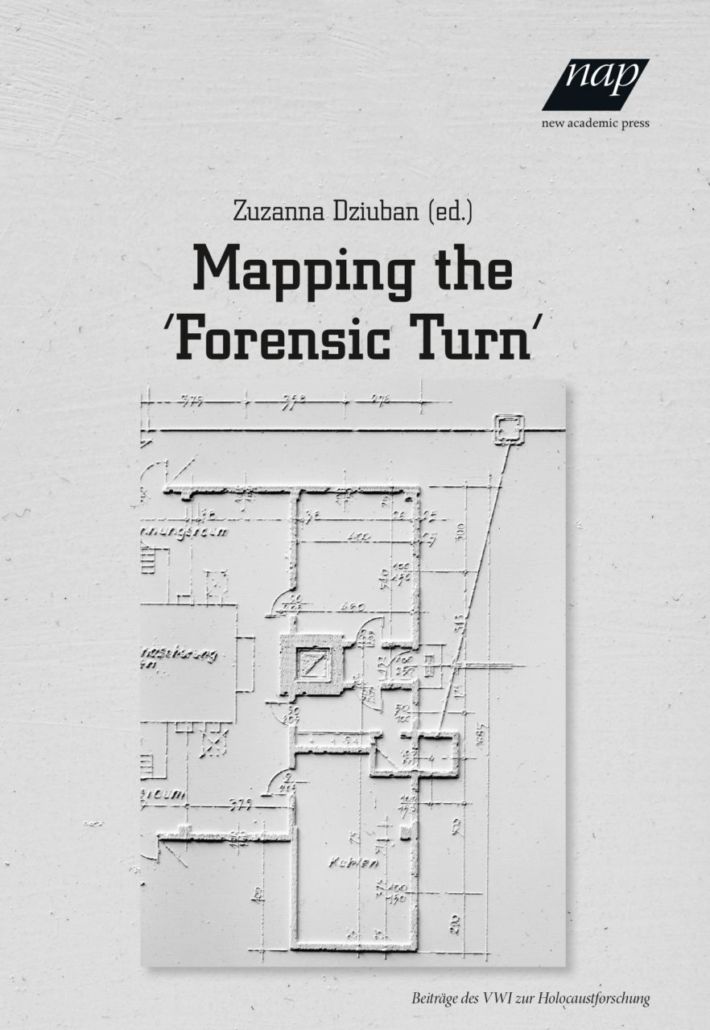
DZIUBAN, Zuzanna (2017) Mapping the “Forensic Turn”: Engagements with Materialities of Mass Death in Holocaust Studies and Beyond
January 12, 2018


During recent decades, forensic investigation has become a standard response to the reality of mass graves resulting from genocides and various forms of political violence. From Argentina to Rwanda, from former Yugoslavia to Poland, the search for the sites of mass burial, the application of archaeological and forensic practices, and the use of advanced technologies to collect and analyse evidence have all played a major role in transforming former landscapes of violence into scenes of crime. Yet truth-finding is not the only driving force behind forensic investigations performed at the spaces marked by a difficult past: the issues of politics and justice are at stake, as are the dynamics of memory and mourning and of the future of post-conflict societies, framed through the prism of the relationships between the dead and the living. The diagnoses of the ‘forensic turn’ therefore open up a complex terrain shaped by the interplay of scientific protocols, political interest, ethical sensitivities, and materialities of mass death – bringing about a proliferation of practices and counter-practices, discourses and counterdiscourses, imageries and counter-imageries. Building upon this recognition, this book asks how the turn towards forensics both as a standardized practice in the search for and identification of bodies, as a paradigm shift in remembrance and as an emergent cultural sensitivity, extends beyond the sites where forensic science operates, and transforms the fields of social and human sciences, political activism, popular imagination, and art.
Born out of debates held during the international workshop Forensic Turn in Holocaust Studies at the Vienna Wiesenthal Institute in June 2015, this book gathers contributions investigating theoretical, methodological, political and practical implications of the ‘forensic turn’ within and well beyond the (inter)disciplinary realm of Holocaust studies.

Zuzanna Dziuban;

Dr. Zuzanna Dziuban es investigadora postdoctoral en la Amsterdam School for Heritage, Memory and Material Culture (dentro del proyecto iC-ACCESS HERA project)


http://www.newacademicpress.at/gesamtverzeichnis/geschichte/mapping-the-forensic-turn-engagements-with-materialities-of-mass-death-in-holocaust-studies-and-beyond/

Share this entry
  • Share on Facebook
  • Share on X
  • Share on WhatsApp
  • Share on LinkedIn
  • Share by Mail
https://politicasdelamemoria.org/wp-content/uploads/2018/01/978-3-7003-2072-2-1.jpg 1280 882 Miriam Saqqa https://politicasdelamemoria.org/wp-content/uploads/2015/01/logo_memoria_Web.png Miriam Saqqa2018-01-12 15:42:372018-01-12 15:46:16DZIUBAN, Zuzanna (2017) Mapping the “Forensic Turn”: Engagements with Materialities of Mass Death in Holocaust Studies and Beyond

Lastest publications

  • DE KERANGAT, Zoé (2022). Memoria y justicia popular: Exhumaciones de las víctimas del franquismo durante la Transición españolaOctober 18, 2024 - 11:22 am
  • PALACIOS GONZÁLEZ, Daniel (2024). Making Monuments from Mass Graves in Contemporary SpainSeptember 17, 2024 - 5:15 pm
  • SAQQA CARAZO, Miriam (2024). Las exhumaciones por Dios y por EspañaSeptember 17, 2024 - 11:23 am

Lastest activities

  • Historical Memory and Archaeology of the Spanish Civil War and the Franco RegimeNovember 26, 2024 - 11:48 am
  • Where are the Africans? Erasure, elision and that task of self-writingSeptember 17, 2024 - 11:28 am
  • International Congress. Weaving memory: Public Policies, Mass Graves, and Materialities. 2024May 11, 2024 - 8:25 am
Tweets por el @PoliticaMemoria.

Políticas de la memoria

El pasado bajo tierra: exhumaciones y políticas de la memoria en la España contemporánea en perspectiva transnacional y comparada

Proyectos Asociados:
HISTOFOR: PID2024-159223NB-I00 (2026-20289
MEM2OR: BICON24084 (2025-2026)
NECROPOL: PID2019-104418RB-I00 (2020-2024)
SUBTIERRO: CSO2015-66104-R (2016-2019)
UNREST: H2020 REFLECTIVE-5-2015, ref. 693523 (2016-2019)
PASADO BAJO TIERRA: CSO2012-32709 (2013-2015)
ISTME: COST Action IS1203 (2012-2016)
POLMEM: CSO2009-09681 (2010-2013)
SPBUILD: 7PM MARIE CURIE, ITN 238589 (2010-2013)
PIE CSIC: 200710I006 (2007-2009). Las políticas de la memoria en la España contemporánea


Contact

Centro de Ciencias Humanas y Sociales - Consejo Superior de Investigaciones Científicas.
Offices: 1F25 and 1F18
Albasanz 26-28.
Madrid 28037 (Spain)
politicasdelamemoria@gmail.com

hosgeldin bonusu veren siteler

© Políticas de la memoria - 2015. Some rights reserved. Creative Commons license. | Web design and developmen by Freepress S. Coop. Mad.
  • Link to X
  • Link to Facebook
  • Link to Vimeo
  • Link to Mail
Link to: Second Annual Conference of the Memory Studies Association. Copenhagen, 14-16 December 2017. Link to: Second Annual Conference of the Memory Studies Association. Copenhagen, 14-16 December 2017. Second Annual Conference of the Memory Studies Association. Copenhagen, 14-16... Link to: Poetics of Resistance against oblivion and impunity. Stories of mothers whose children were killed by the Colombian army. Link to: Poetics of Resistance against oblivion and impunity. Stories of mothers whose children were killed by the Colombian army. Poetics of Resistance against oblivion and impunity. Stories of mothers whose...
Scroll to top Scroll to top Scroll to top