• Link to X
  • Link to Facebook
  • Link to Vimeo
  • Link to Mail
  • Español Español Spanish es
  • English English English en
Las políticas de la memoria
  • The Project
  • Research Team
    • Research team 2020-2024
    • Research Team 2016-2019
    • Research Team 2013-2015
    • Research Team 2010-2012
  • Team publications
    • Team books
    • Chapters and articles
  • Activities
    • Faces and traces of violence
    • Faces and traces of violence Lecture Series – Barcelona
    • Others activities
  • News
  • Mass media
  • Resources
    • Pedagogical resources
    • Links
  • Recommendations
    • Books
    • Audiovisuals
    • Articles, exhibitions and websites
  • Click to open the search input field Click to open the search input field Search
  • Menu Menu

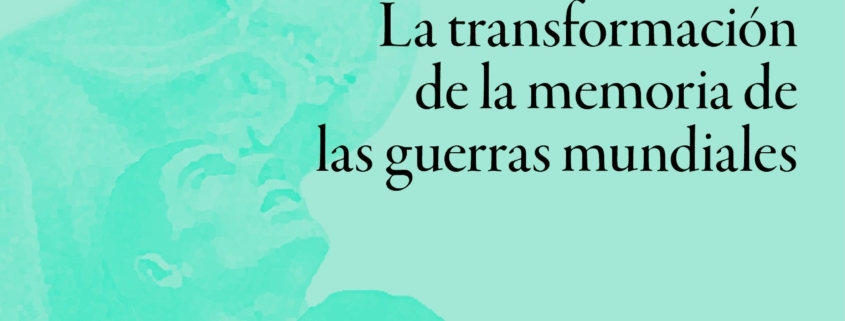
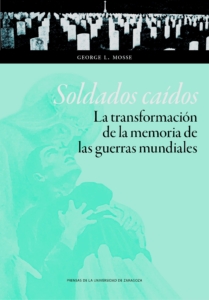
Fallen soldiers. The Transformation of the Memory of World Wars
September 10, 2019

The First World War was not simply an unprecedented human catastrophe, but the tragic event that would give rise to Nazism and its genocidal policies. In this book, George L. Mosse reveals the myth of the experience of war, which from the time of the French Revolution to the Second World War masked the horrors of war with a glorious, romantic and transcendental mantle. The cult of fallen soldiers, war memorials, the banalization of the massacre and the brutalization of life caused by the experience of the Great War allow us to understand, through a fascinating narrative, the drift of Europe towards mass death in the twentieth century.


Author: George L. Mosse
 

https://politicasdelamemoria.org/wp-content/uploads/2019/09/9788416515394.jpg 2540 1772 F. https://politicasdelamemoria.org/wp-content/uploads/2015/01/logo_memoria_Web.png F.2019-09-10 14:06:292019-09-10 14:06:29Fallen soldiers. The Transformation of the Memory of World Wars

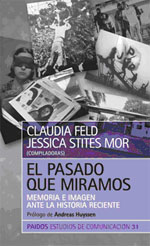
The past we look at: memory and image in the face of recent history

August 1, 2019

The essays gathered in this book constitute a fundamental and novel contribution both in the field of communication and in memory studies. Based on the analysis of the different ways of using images in the memory of post-dictatorial Argentina, the compilers not only delimit a problem, but also establish a new line of work by placing their object in the perspective of a multiplicity of approaches. The medium of this book is the language of and about all means of expression of memory: declaration, testimony, autobiography, photography, cinema, documentary, television.

Focusing on visual media, the essays in this book, with their diverse styles and approaches, attempt to understand the relationships between verbal language and image, history and memory, fact and fiction. With this mission, the book avoids falling into a trap that lurks in much of the contemporary bibliography on memory: to believe in the complete authenticity, at all times, of the witness’s voice. And he does not refrain from pointing out mitifications and compulsions to repetition in the process of remembering the disappeared through photography, film and television. In this sense, The Past We Look at is an essential contribution to thinking about and discussing the present.


Compilers: Claudia Feld y Jessica Stites Mor


https://politicasdelamemoria.org/wp-content/uploads/2019/08/libro_agosto.jpg 246 150 F. https://politicasdelamemoria.org/wp-content/uploads/2015/01/logo_memoria_Web.png F.2019-08-01 17:31:282019-08-01 17:31:28The past we look at: memory and image in the face of recent history

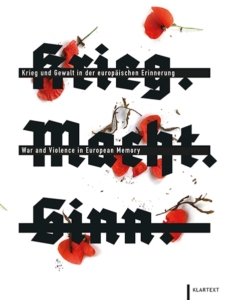
Krieg und Gewalt in der europäischen Erinnerung. War and Violence in European Memory

July 1, 2019

More than 100 million people lost their lives to war, expulsion and genocide during the course of the 20th century. To mark the 100th anniversary of the end of the First World War on 11 November 2018, the Ruhr Museum in Essen is staging an exhibition entitled “Krieg. Macht. Sinn. War and Violence in European Memory”. This catalogue brings together articles and exhibits to illustrate the subject of war and its accompanying phenomena from a variety of angles.

Authors: Stefan Berger, Heinrich Theodor Grütter and Wulf Kansteiner

For more information


https://politicasdelamemoria.org/wp-content/uploads/2019/07/libroRecomendadoJulio.jpg 600 461 F. https://politicasdelamemoria.org/wp-content/uploads/2015/01/logo_memoria_Web.png F.2019-07-01 16:04:462019-07-01 16:04:46Krieg und Gewalt in der europäischen Erinnerung. War and Violence in European Memory

Poetics of Absence

June 3, 2019

How to talk about the past when that same gesture is being co-opted and deactivated by power? This essay follows a red thread in contemporary visual culture to discover certain works that subvert the rules imposed by the so-called Transition culture to refer to the past. The “Poetics of Absence” is encrypted in them: These […]

Read more
https://politicasdelamemoria.org/wp-content/uploads/2019/06/51KhBy99hVL.jpg 500 354 F. https://politicasdelamemoria.org/wp-content/uploads/2015/01/logo_memoria_Web.png F.2019-06-03 13:13:572019-06-03 13:13:57Poetics of Absence

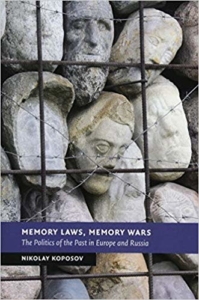
Memory Laws, Memory Wars

May 8, 2019

Laws against Holocaust denial are perhaps the best-known manifestation of the present-day politics of historical memory. In Memory Laws, Memory Wars, Nikolay Koposov examines the phenomenon of memory laws in Western and Eastern Europe, Ukraine, and Russia and exposes their very different purposes in the East and West. In Western Europe, he shows how memory laws were designed to create a common European memory centred on the memory of the Holocaust as a means of integrating Europe, combating racism, and averting national and ethnic conflicts. In Russia and Eastern Europe, by contrast, legislation on the issues of the past is often used to give the force of law to narratives which serve the narrower interests of nation states and protect the memory of perpetrators rather than victims. This will be essential reading for all those interested in ongoing conflicts over the legacy of the Second World War, Nazism, and communism.

Author: Nikolay Koposov

For more information


https://politicasdelamemoria.org/wp-content/uploads/2019/05/libro_mayo.jpg 499 331 F. https://politicasdelamemoria.org/wp-content/uploads/2015/01/logo_memoria_Web.png F.2019-05-08 13:15:472019-05-08 13:15:47Memory Laws, Memory Wars

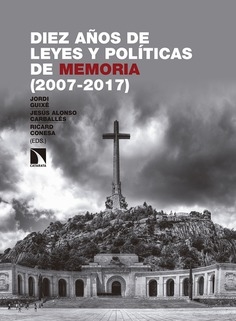
GUIXÉ, Jordi, ALONSO, Jesús, and CONESA, Ricard (2019). Ten years of memory laws and policies (2007-2017)

April 1, 2019

In 2007, two laws were passed that marked a before and after in attempts to legislate on the effects of the traumatic past of the Civil War and Francoism. On the one hand, the Congress of Deputies approved the Law of Historical Memory and on the other, the Parliament of Catalonia gave the green light to the Law of Democratic Memorial. What have been their real effects? What consequences and reactions have they provoked? In the last legislature, memory policies have taken a new direction with the creation of a General Directorate of Historical Memory and the decision to exhume dictator Francisco Franco from his grave in the Valley of the Fallen. The impunity of the dictatorship’s crimes, the state of the mass graves, the treatment of Franco’s symbology or the role of the memorialist associations are themes that continue to be valid.


Authors: Jordi Guixé i Coromines, Jesús Alonso Carballés, and Ricard Conesa Sánchez

For more information


https://politicasdelamemoria.org/wp-content/uploads/2019/04/edition-81424-236x354.jpg 354 236 F. https://politicasdelamemoria.org/wp-content/uploads/2015/01/logo_memoria_Web.png F.2019-04-01 13:51:562019-04-01 13:51:56GUIXÉ, Jordi, ALONSO, Jesús, and CONESA, Ricard (2019). Ten years of memory laws and policies (2007-2017)

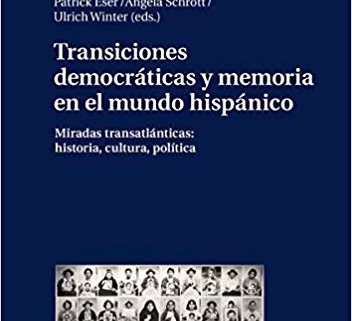
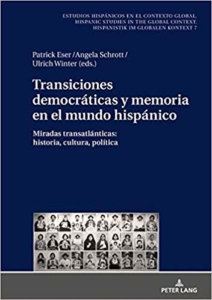
ESER, Patrick, SCHROTT, Angela and WINTER, Ulrich (editors)(2018). Democratic transitions and memory in the Hispanic world

March 4, 2019

The democratic transitions in the Iberian Peninsula and the Southern Cone during the 1970s and 1980s form a large part of the collective memories on both sides of the Atlantic. However, these memories are not only national, but converge in a transnational memorial space, which invites transatlantic views from Spain and the Southern Cone. This book offers a comparison of these two regions and describes the emergence of a transatlantic memory space, with its artistic and discursive dynamics. As the subject of memory is an intrinsically transdisciplinary field, the studies gather historiographical, political-juridical aspects, literary-artistic and filmic creation, as well as cultural and linguistic-discursive practices.


Editors: Patrick Eser, Angela Schrott and Ulrich Winter

For more information


https://politicasdelamemoria.org/wp-content/uploads/2019/03/libro_marzo.jpg 499 352 F. https://politicasdelamemoria.org/wp-content/uploads/2015/01/logo_memoria_Web.png F.2019-03-04 12:48:232019-03-04 12:49:48ESER, Patrick, SCHROTT, Angela and WINTER, Ulrich (editors)(2018). Democratic transitions and memory in the Hispanic world

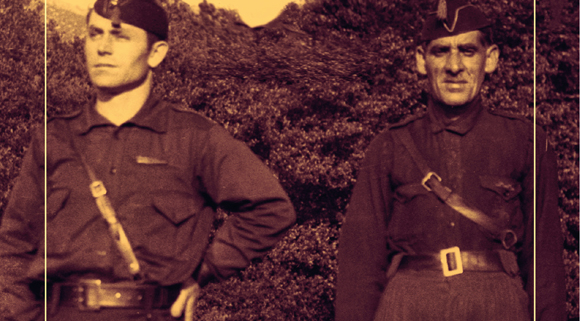
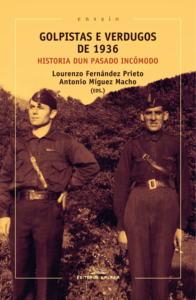
FERNÁNDEZ PRIETO, Lourenzo and MÍGUEZ MACHO, Antonio (editors)(2018). Golpistas e verdugos de 1936. Historia dun pasado incómodo

February 1, 2019

This is the story of the executioners. It is not a heroic or pleasant story, nor a forgotten story. It’s a story we did not want to know, but historians are forced to investigate and contextualize. Knowledge is always surprising and deflects errors, myths, interested deformations. We tried that. The readers will know in this book the social dimensions of the executors and collaborators. How much the violence of the coup expanded. The coup leaders will be known to persecute the authorities, starting with the military. How the civil, military, police and administrative authorities were shot without imagining that they would be executed, because that possibility was not part of their world, nor of their life and political experience.


Editors: Lourenzo Fernández Prieto y Antonio Míguez Macho

For more information


https://politicasdelamemoria.org/wp-content/uploads/2019/02/Golpistas-e-Verdugos-de-1936.jpg 889 580 F. https://politicasdelamemoria.org/wp-content/uploads/2015/01/logo_memoria_Web.png F.2019-02-01 13:54:352019-02-01 13:55:03FERNÁNDEZ PRIETO, Lourenzo and MÍGUEZ MACHO, Antonio (editors)(2018). Golpistas e verdugos de 1936. Historia dun pasado incómodo

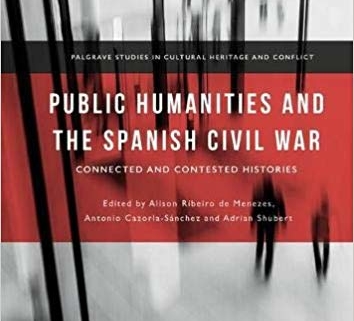
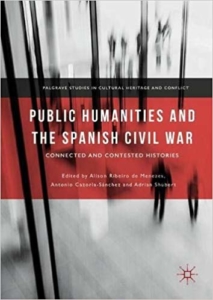
RIBEIRO DE MENEZES, Alison, CAZORLA-SANCHEZ, Antonio, and SHUBERT, Adrian (editors)(2018). Public Humanities and the Spanish Civil War

January 3, 2019

This interdisciplinary collection of essays examines contemporary public history’s engagement with the Spanish Civil War. The chapters discuss the history and mission of the main institutional archives of the war, contemporary and forensic archaeology of the conflict, burial sites, the affordances of digital culture in the sphere of war memory, the teaching of the conflict in Spanish school curricula, and the place of war memory within human rights initiatives. Adopting a strongly comparative focus, the authors argue for greater public visibility and more nuanced discussion of the Civil War’s legacy, positing a virtual museum as one means to foster dialogue.


Editors: Alison Ribeiro de Menezes, Antonio Cazorla-Sánchez, Adrian Shubert

For more information


https://politicasdelamemoria.org/wp-content/uploads/2019/01/libro_enero.jpg 499 354 F. https://politicasdelamemoria.org/wp-content/uploads/2015/01/logo_memoria_Web.png F.2019-01-03 16:18:172019-01-03 16:18:17RIBEIRO DE MENEZES, Alison, CAZORLA-SANCHEZ, Antonio, and SHUBERT, Adrian (editors)(2018). Public Humanities and the Spanish Civil War

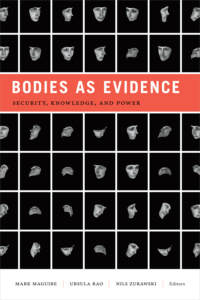
MAGUIRE, Mark, RAO, Ursula, and ZURAWSKI, Nils (editors)(2018). Bodies as Evidence: Security, Knowledge, and Power

December 3, 2018

From biometrics to predictive policing, contemporary security relies on sophisticated scientific evidence-gathering and knowledge-making focused on the human body. Bringing together new anthropological perspectives on the complexities of security in the present moment, the contributors to Bodies as Evidence reveal how bodies have become critical sources of evidence that is organized and deployed to classify, recognize, and manage human life.

Through global case studies that explore biometric identification, border control, forensics, predictive policing, and counterterrorism, the contributors show how security discourses and practices that target the body contribute to new configurations of knowledge and power. At the same time, margins of error, unreliable technologies, and a growing suspicion of scientific evidence in a “post-truth” era contribute to growing insecurity, especially among marginalized populations.


Editors: Mark Maguire, Ursula Rao, y Nils Zurawski

Contributors: Carolina Alonso-Bejarano, Gregory Feldman, Francisco J. Ferrándiz, Daniel M. Goldstein, Ieva Jusionyte, Amade M’charek, Mark Maguire, Joseph P. Masco, Ursula Rao, Antonius C. G. M. Robben, Joseba Zulaika, y Nils Zurawski

For more information


https://politicasdelamemoria.org/wp-content/uploads/2018/12/978-1-4780-0294-9_pr.jpg 900 600 F. https://politicasdelamemoria.org/wp-content/uploads/2015/01/logo_memoria_Web.png F.2018-12-03 15:05:392019-01-03 16:12:24MAGUIRE, Mark, RAO, Ursula, and ZURAWSKI, Nils (editors)(2018). Bodies as Evidence: Security, Knowledge, and Power
Page 2 of 512345

Lastest publications

  • DE KERANGAT, Zoé (2022). Memoria y justicia popular: Exhumaciones de las víctimas del franquismo durante la Transición españolaOctober 18, 2024 - 11:22 am
  • PALACIOS GONZÁLEZ, Daniel (2024). Making Monuments from Mass Graves in Contemporary SpainSeptember 17, 2024 - 5:15 pm
  • SAQQA CARAZO, Miriam (2024). Las exhumaciones por Dios y por EspañaSeptember 17, 2024 - 11:23 am

Lastest activities

  • Historical Memory and Archaeology of the Spanish Civil War and the Franco RegimeNovember 26, 2024 - 11:48 am
  • Where are the Africans? Erasure, elision and that task of self-writingSeptember 17, 2024 - 11:28 am
  • International Congress. Weaving memory: Public Policies, Mass Graves, and Materialities. 2024May 11, 2024 - 8:25 am
Tweets por el @PoliticaMemoria.

Políticas de la memoria

El pasado bajo tierra: exhumaciones y políticas de la memoria en la España contemporánea en perspectiva transnacional y comparada

Proyectos Asociados:
HISTOFOR: PID2024-159223NB-I00 (2026-20289
MEM2OR: BICON24084 (2025-2026)
NECROPOL: PID2019-104418RB-I00 (2020-2024)
SUBTIERRO: CSO2015-66104-R (2016-2019)
UNREST: H2020 REFLECTIVE-5-2015, ref. 693523 (2016-2019)
PASADO BAJO TIERRA: CSO2012-32709 (2013-2015)
ISTME: COST Action IS1203 (2012-2016)
POLMEM: CSO2009-09681 (2010-2013)
SPBUILD: 7PM MARIE CURIE, ITN 238589 (2010-2013)
PIE CSIC: 200710I006 (2007-2009). Las políticas de la memoria en la España contemporánea


Contact

Centro de Ciencias Humanas y Sociales - Consejo Superior de Investigaciones Científicas.
Offices: 1F25 and 1F18
Albasanz 26-28.
Madrid 28037 (Spain)
politicasdelamemoria@gmail.com

hosgeldin bonusu veren siteler

© Políticas de la memoria - 2015. Some rights reserved. Creative Commons license. | Web design and developmen by Freepress S. Coop. Mad.
  • Link to X
  • Link to Facebook
  • Link to Vimeo
  • Link to Mail
Scroll to top Scroll to top Scroll to top